3 Essential Skills You NEED To Overcome Anxiety
I didn’t leave my house for three years…
I became a modern-world Rapunzel, and anxiety was the evil witch.
What caused it? What made it so hard for me to go outside?
Many things. But it boiled down to my upbringing and environment. Many people don’t know that the persistence of anxiety, especially anxiety disorders, is 90% rooted in your cognition. How you perceive events and physical sensations determines how you respond to them.
As a child, I craved freedom and often fantasized about a life where I wasn’t watched or monitored. I lived under a hawk’s wing, protected from anything and anyone that could hurt me. I couldn’t see my friends without parental supervision or walk down the street alone. “Be careful”, “Don’t talk to strangers”, “There are bad people out there”. I would often hear about the daily happenings in our community and the world, ranging from stabbings and pedophilia to terrorism and natural disasters. I felt like I couldn’t breathe sometimes.
To this day, I’m still reminded of the potential negative outcomes of every situation I get into. This way of thinking destroyed me psychologically and became the catalyst for a myriad of anxiety disorders, especially Agoraphobia. Every action I took, no matter how small, would be accompanied by “what if?” thoughts. My mind lived inside worst-case scenarios, and it was exhausting.
My grandmother raised me because my mother was working full-time. I became reliant and dependent on her for everything. She guided me, fed me, bathed me, and cleaned up after me every day until I was seventeen years old (minus the bathing part, lol). She was always in my peripheral vision and there to meet every need and fix every problem. Not only was my freedom restricted, but my autonomy was also compromised.
Later in life, this led to the belief that I couldn’t care for myself or handle difficult situations independently. One of the core beliefs of anxiety disorders is believing oneself incapable of handling adversity. Not only that, but my limited exposure to the real world also caused me to become frightened of it. The experiences you have in your formative years lay the foundation for your behaviours, thinking patterns, and mental stability in your adulthood.
I grew up in an Eastern European household, where mental health was never discussed or accepted. Anxiety is viewed as a physical ailment rather than a psychological one, not to mention the negative connotation surrounding it. It felt like I had an incurable disease. Despite my family’s pure intentions, the coddling didn’t help; it only sent me further down into anxiety’s black hole. I became weak, mentally fragile, and dependent on others to take care of me.
To summarize, my development of anxiety was a result of:
Lack of freedom
Lack of independence
Lack of exposure to the real world
A negative and fearful worldview
Three of the most important skills you must develop to overcome anxiety are:
Autonomy
Taking care of yourself and solving problems independently
Self-Confidence
Believing in your ability to handle anything that comes your way
Perspective
Changing your outlook on reality and your perceptions of events
** DIGITAL WORKBOOKS **
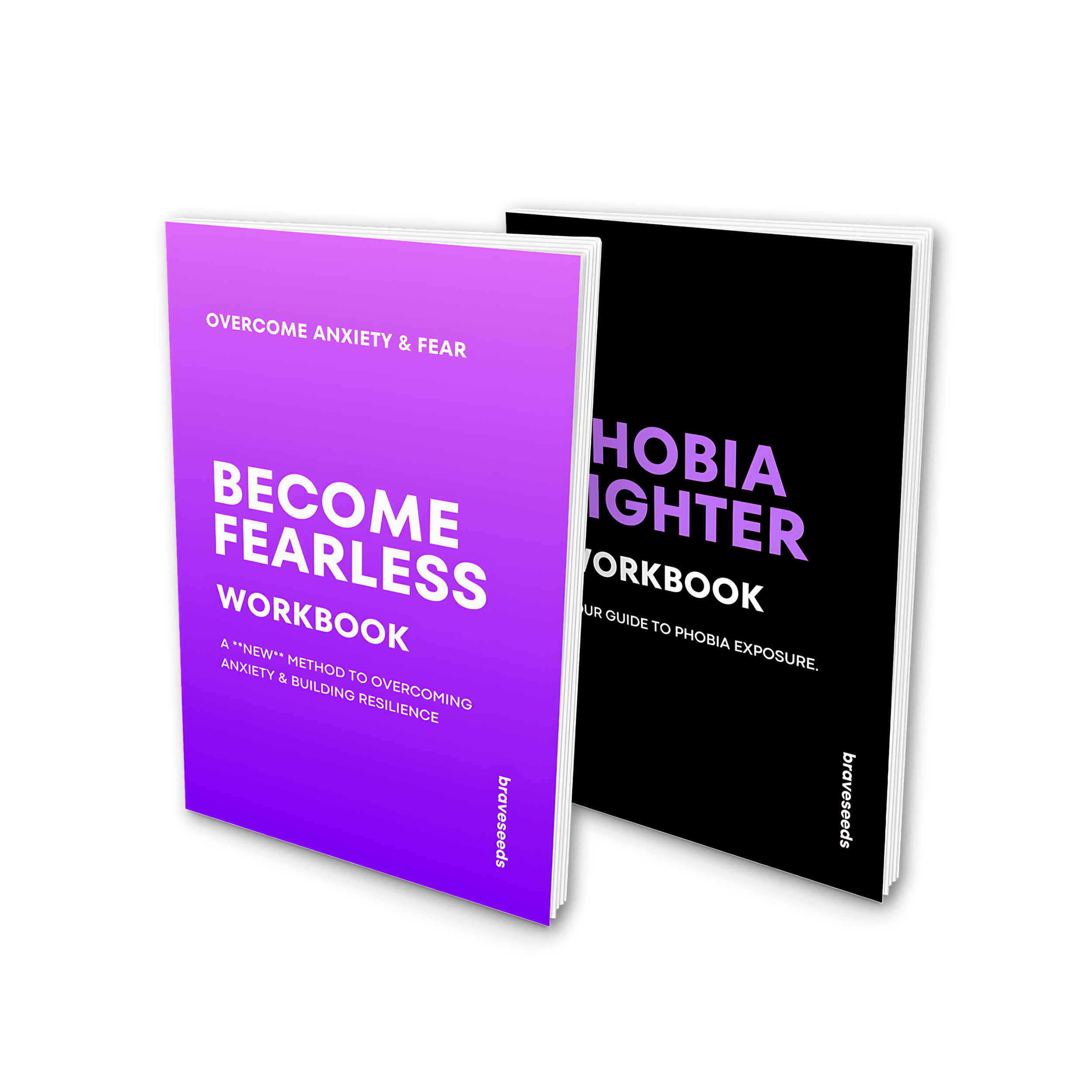
The Anti-Anxiety Bundle is your go-to for tackling fear and worry in a way that feels doable. Forget complex jargon and overwhelming advice because this bundle breaks things down with two workbooks designed to help you successfully navigate anxiety and phobias one step at a time.
With Become Fearless, you'll learn how to manage anxiety using the CRAVED Method, a simple brain hack that rewires your thinking so you can finally get ahead of those anxious thoughts. It's straightforward, practical, and built for real life. No endless lists of things to do, just small, manageable changes to help you feel more in control.
Phobia Fighter is your toolkit for facing the fears that are holding you back. Whether it’s social situations, flying, or something else entirely, this workbook helps you take small, steady steps to expand your comfort zone. It’s like having a roadmap for fear, with progress trackers to remind you that every little step counts.
What's inside?
Evidence-based solutions
The CRAVED Method—a brand new approach you won’t find anywhere else
Overcome anxiety without relying on medication
Hack your brain using neuroscience
Strengthen your mental and physical resilience
Simple, easy-to-understand concepts with real-world application
Successfully expand your comfort zone
Exposure therapy made EASY
Includes:
Exposure therapy tracking sheets!
“As someone who is diagnosed with anxiety this book has really helped me with dealing with my panic attacks.” — Mia (16)